


Vanguard Diver Watch
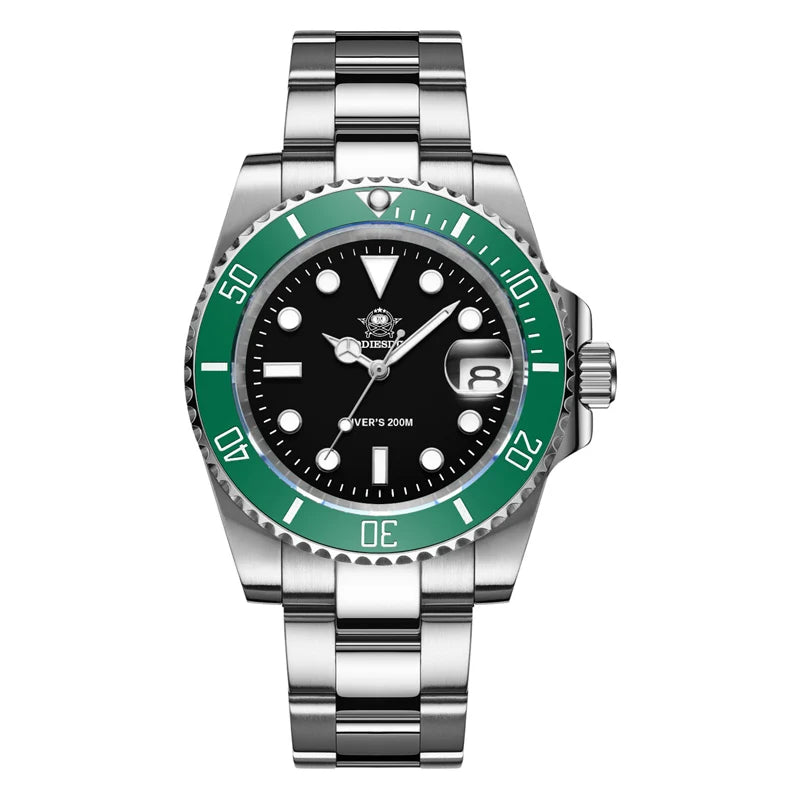
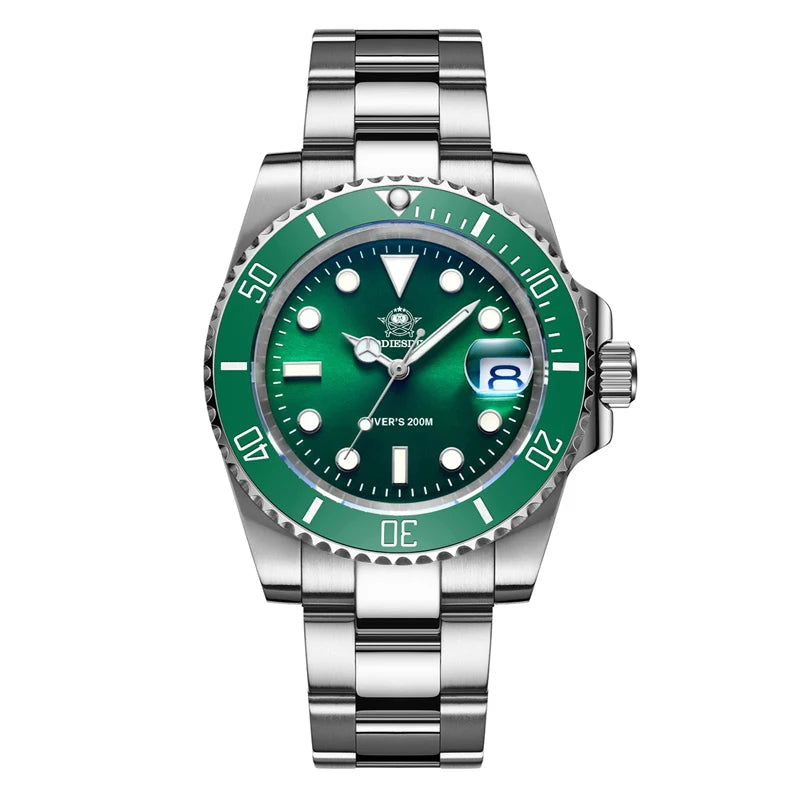
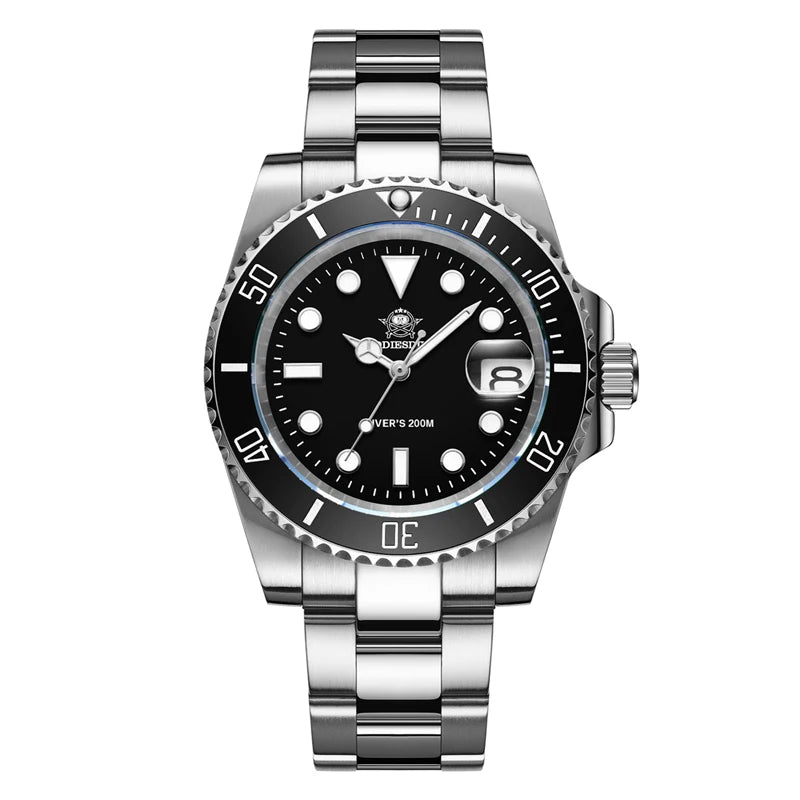
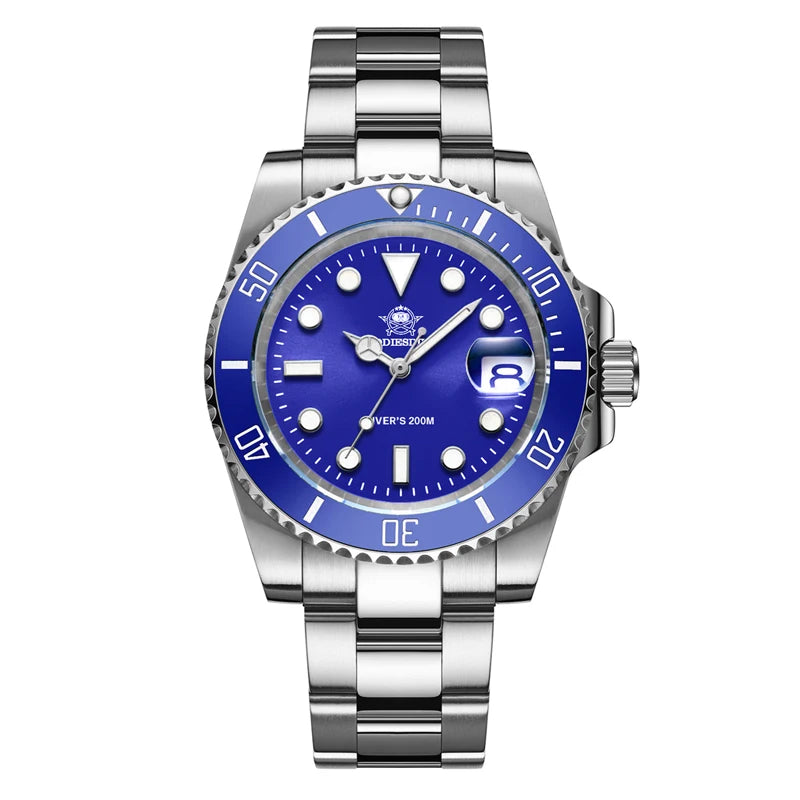
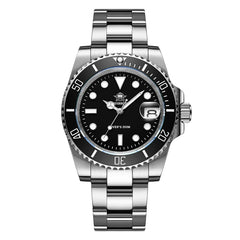
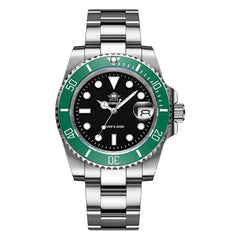
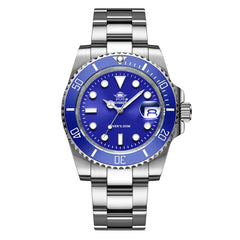
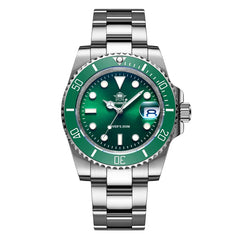
Two hundred metres, and a bezel that will not fade.
A steel case with a ceramic bezel and sapphire crystal, rated to twenty bar. The two hardest surfaces in watchmaking sitting on the two parts that take the most punishment. Japanese quartz underneath, which asks nothing of you but a battery every few years.
The Detail
Ceramic bezel.
Aluminium bezels fade and scratch within a year. Ceramic holds its colour and finish for the life of the watch. It is the detail that separates a serious diver from one that looks like one.
Twenty bar.
Genuine diving resistance, not the splash rating most watches carry. Swimming, snorkelling and everyday water are well within it.
Sapphire crystal.
The hardest material used in watchmaking short of diamond. Keys, desks and door frames leave no mark on it.
Readable in the dark.
Luminous hands, which on a diver is not decoration. It is the point.
Specifications
| Case | Stainless steel, round |
| Bezel | Ceramic |
| Bracelet | Stainless steel, 22cm length |
| Clasp | Folding safety clasp |
| Crystal | Sapphire |
| Movement | Japanese quartz |
| Calendar | Full calendar |
| Luminosity | Luminous hands |
| Water resistance | 20 bar |
Taking Care Of It
Water.
Twenty bar covers swimming, snorkelling and everyday exposure. Rinse with fresh water after the sea or a pool, since salt and chlorine are what work on the seals over time.
The crown stays closed.
Pull it out only when the watch is completely dry, and push it fully home afterwards. The rating depends entirely on it being seated.
Avoid hot water.
Showers and saunas are harder on seals than depth is. Heat expands the gaskets in a way pressure does not.
Setting the calendar.
Avoid changing the date between nine in the evening and three in the morning, while the movement is already turning it over.
The battery.
A quartz movement runs for years on one cell. Have it changed promptly, and always by someone who can reseal the case.
